

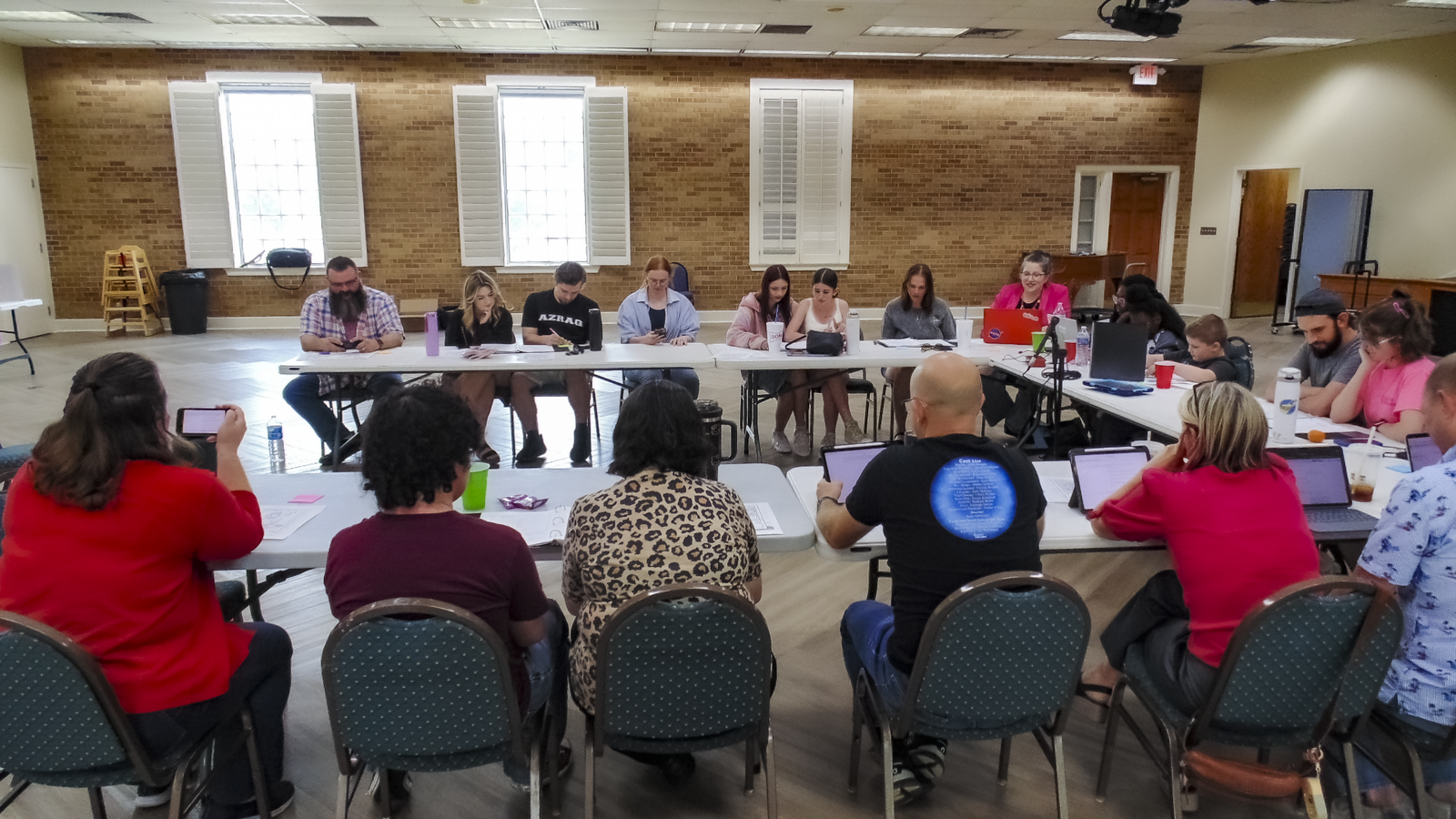
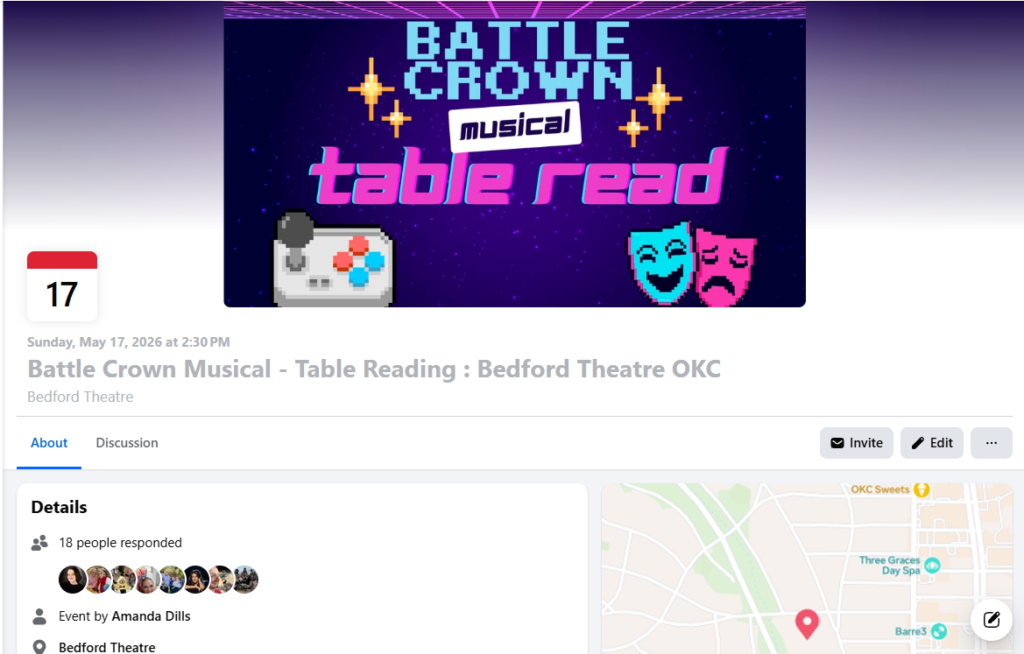
In May 2026, I hosted a table read of Battle Crown: The Legend of Princess Pink at Bedford Theatre in Oklahoma City.
It was the most public, multigenerational version of the show I’ve ever put in a room. And I’m very happy to say that it validated how I think about what this musical can be and who it’s for.
But to explain why Bedford, I have to back up a little.
How I Got Here: Seussical
Earlier this year, I was part of the cast of a multi-generational community production Seussical at Bedford Theatre, playing Mrs. Mayor. It was my first time on stage in 14 years, and the first time I’d ever shared a stage with my kiddo (not pictured, lol).
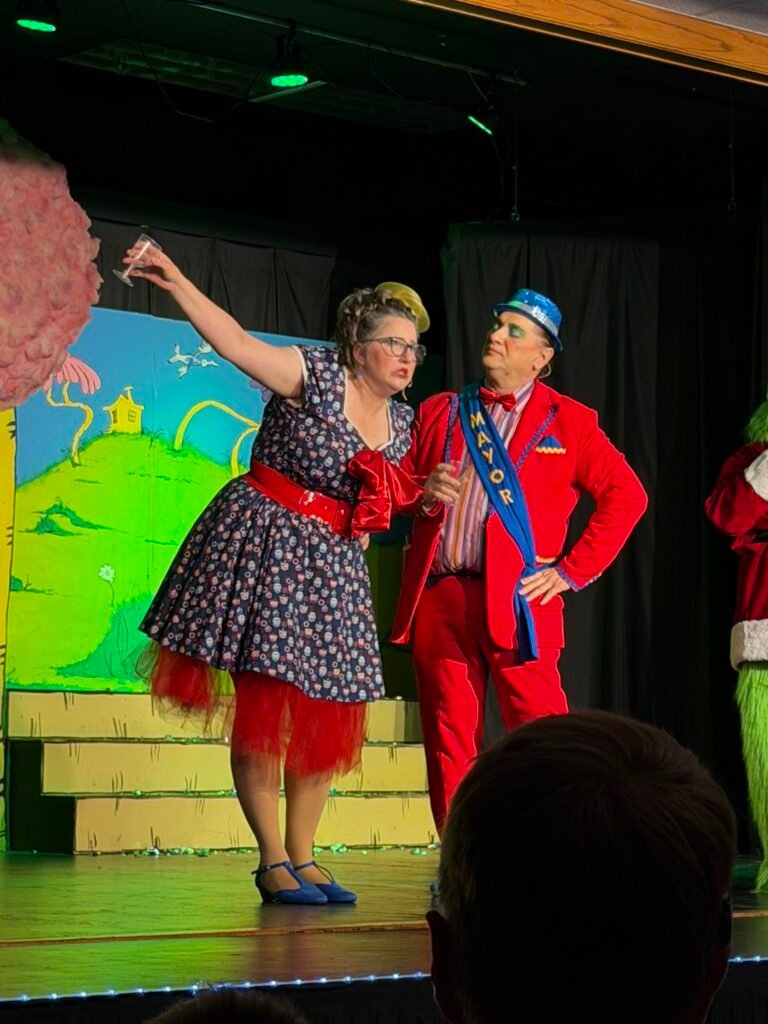
Bedford is exactly the kind of theater I want Battle Crown to live in someday. It’s community-rooted, multigenerational, welcoming, and creative. As Seussical was wrapping up, I kept thinking: this cast, this audience, this energy – this is the world Battle Crown was written for. So as we headed into the final performances, I already knew what I wanted to do next.
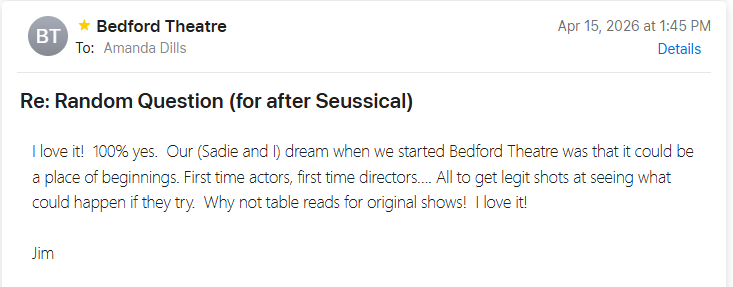
I sent the director an email that basically said: “Hey, I want to do a table read of my show, and I’d love to invite the Bedford community. Are you in?”
The answer?
Why Now
Without spoiling too many surprises, let’s just say there are some out-of-state-but-nearby opportunities in the works for Battle Crown – more on that VERY SOON. And I knew that before the show went anywhere bigger, I wanted to hear the current draft with a real audience. Specifically, a roomful of strangers who, unlike my immediate family, have not yet met my dear friend Princess Pink.
I started writing Battle Crown shortly after moving to Oklahoma City. It felt right to read her here again before she spreads her wings. We promoted the table read through Bedford’s mailing list and social media, my personal socials, and a couple of Oklahoma City community theater Facebook groups.
Building the Table Read
I knew going into this that Bedford’s community — as wonderful as it is — wasn’t going to be a room full of experienced musical theater developers. I assumed most of the readers would have experience being IN shows, but not in the kind of dramaturgical table reads you do while a show’s in development.
This ended up being more of a feature than a bug, if you know what I mean, but it did mean that I wanted to do a lot of heavy lifting beforehand to help make sure everyone had a good experience.
Here are some of the things I put together:
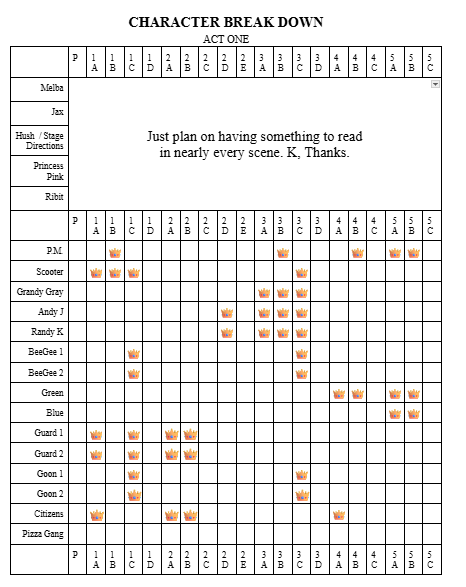
Scene & Character Charts
One of the parallels between Battle Crown and Seussical is the fact that there are many juicy characters who only appear in a few scenes. Since we weren’t planning to double cast anyone in the table reading, I made detailed charts in the script detailing who appears in which sub-scenes, so everyone could see at a glance if they were needed in the current scene. I also added a list of characters appearing in the sub-scene right under each scene heading.
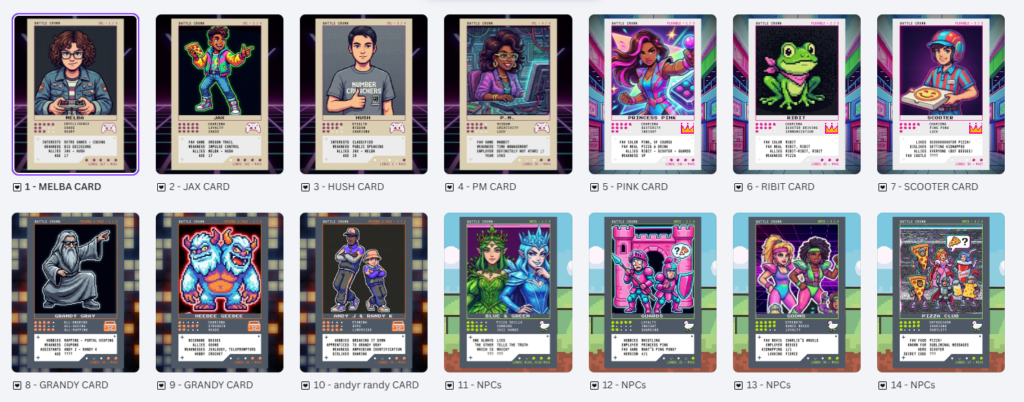
Pokemon-Style Character Cards & Coloring Pages
I created some trading-card style images in Canva for each character to help build up hype for the table read and let people start thinking about which characters they might want to read. Each card had some “stats” for the character, along with an AI-generated image.
To take these to the next level for the table read, I had Gemini turn the trading card images into coloring pages, and added the character description from the script to the bottom of each page.
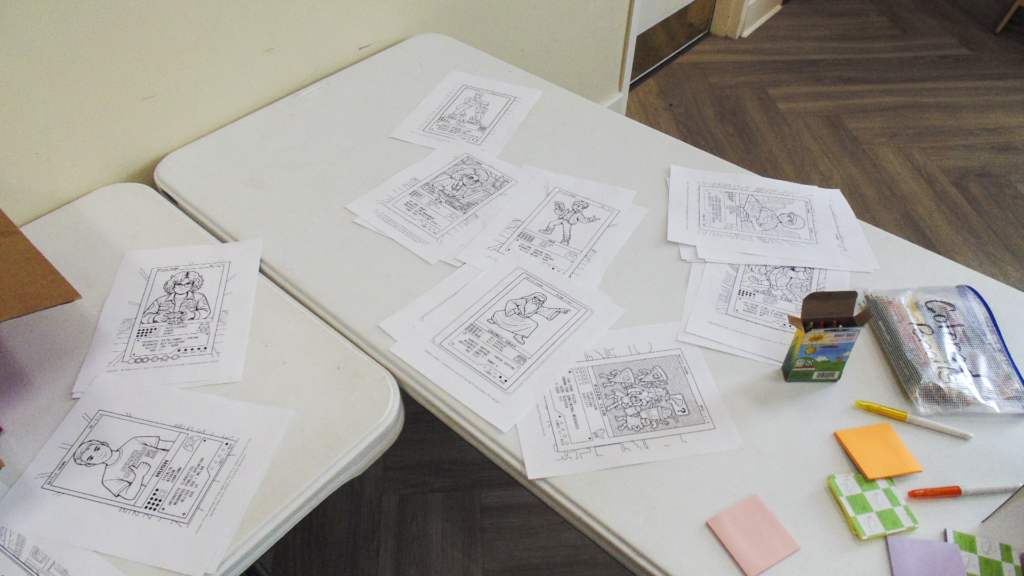
This coloring page idea came from a combination of a few things: 1) Rebecca at MusicalWriters.com recommends handing out “character description handouts” to actors before a “cold” table read. 2) I knew there would be kids at the table read, likely with lots of pages and time to wait between lines, and thought show-themed coloring pages would be a fun way to keep people engaged in the story while they weren’t in a scene.
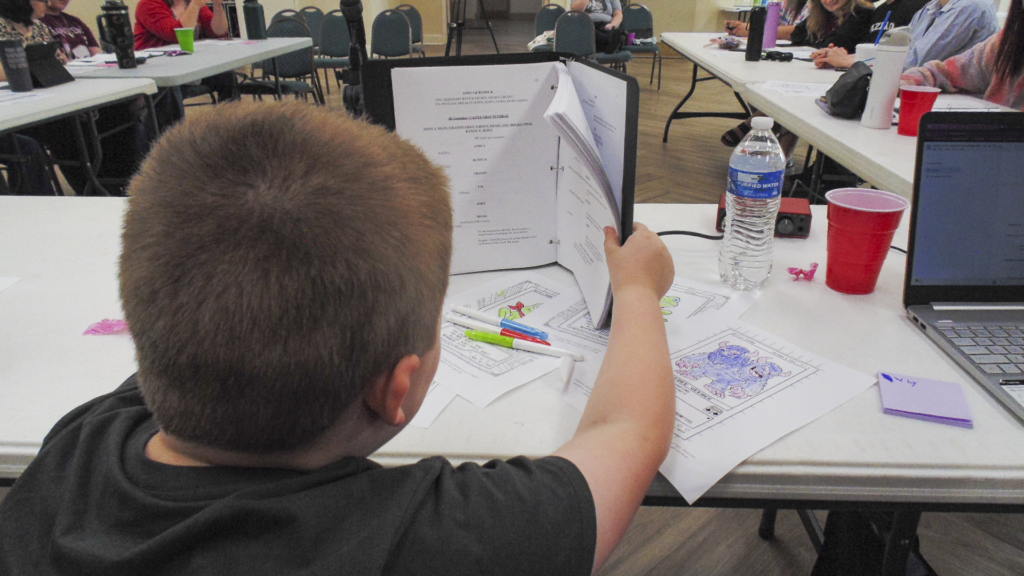
The result, I think, was a hit. People of all ages colored while they waited for their scenes, which kept them off their phones, gave their hands something to do, and helped them connect with their characters.
The Post-It Feedback Wall
I have a long history of using post-it note walls in workshops, so of course I had to use them here.
I set up a tri-fold board next to a bag of pink Starbursts (for Princess Pink, obvi). Blank post it notes were scattered along the tables. The deal was: anytime a reader had a thought, question, suggestion, etc., they were to write it on a Post-It, stick it on the board, and take a Starburst. (I am SO not above bribery!)
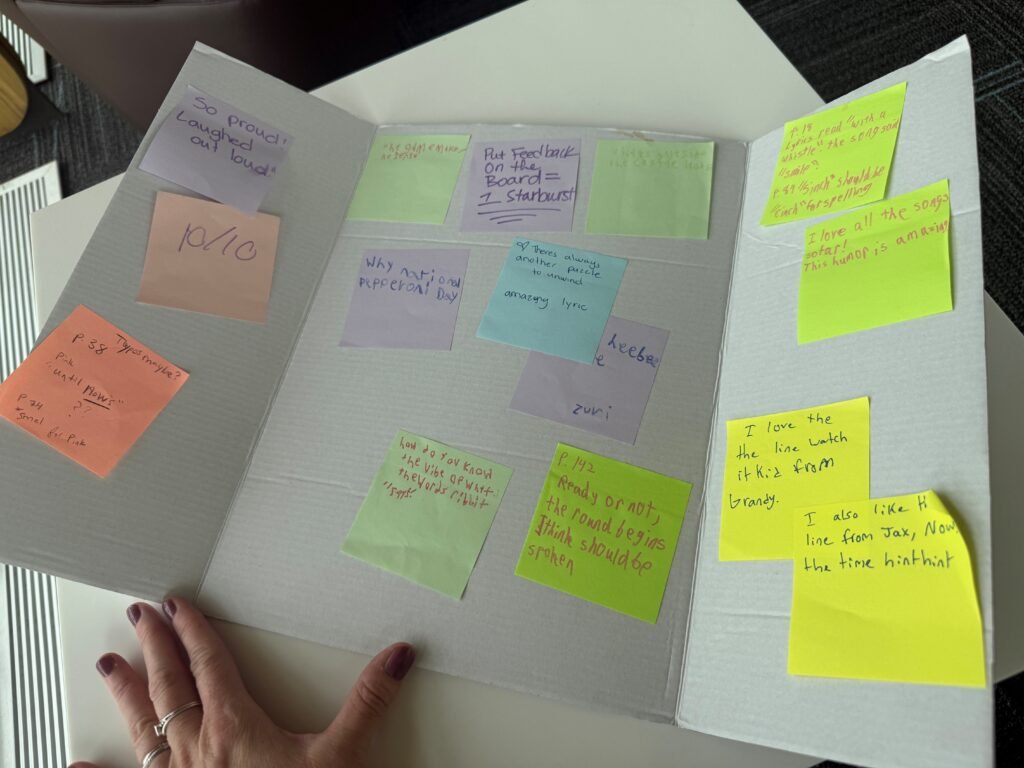
In the future, I would put the board and the very tempting Starbursts closer to my readers, but this activity gave people a low-stakes and anonymous way to share feedback without putting anyone on the spot.
The Results
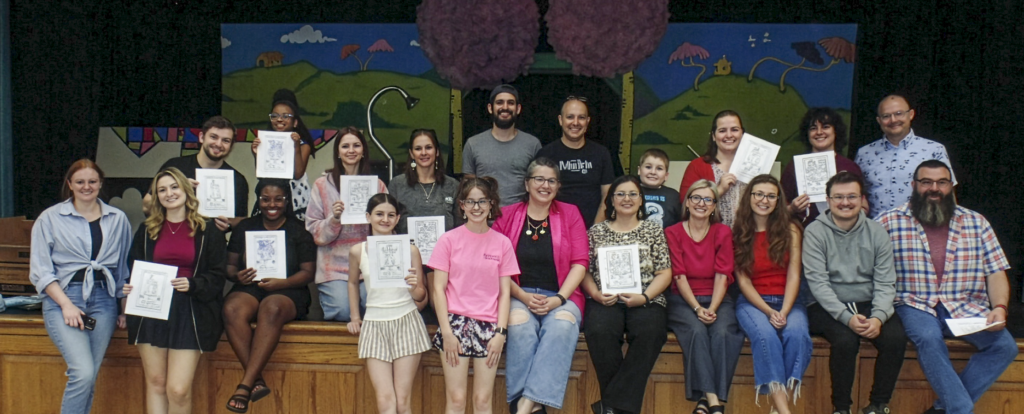
We ended up with 20 readers for this table read – just enough so that everyone had a role who wanted one, with very minimal doubling. The cast included a wide range of ages, from elementary school to teenagers to older adults.
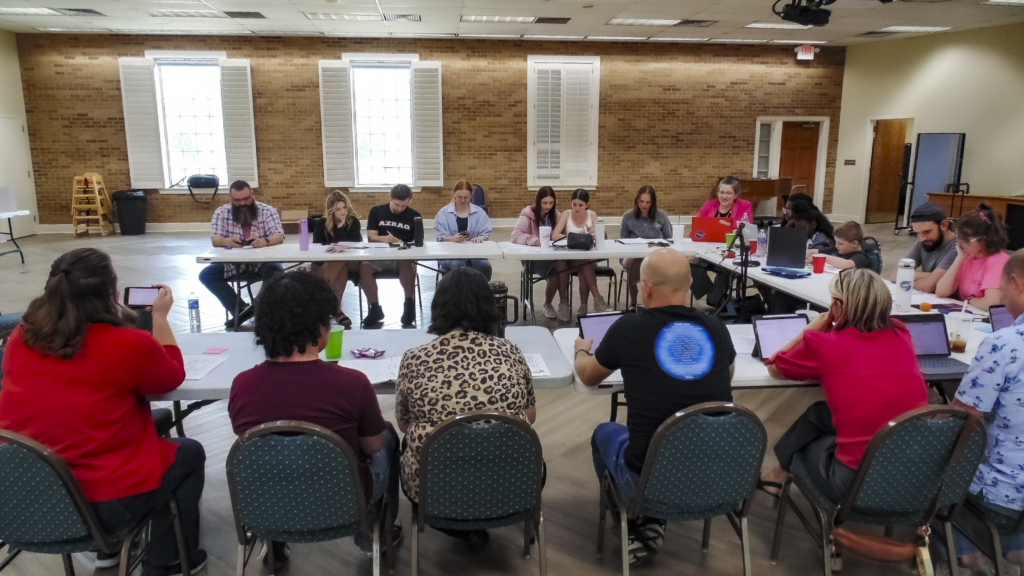
I was especially excited to have teenagers participate in the reading (shout out to Stella and Elora and their awesome moms!), because our three main “IRL” characters in the show are teens. And I am… well, definitely NOT a teenager anymore. So getting to hear them speak the dialogue and watch them get truly invested in the show was a wonderful treat and learning experience!
Overall, everyone’s feedback was very positive, and I feel so good about how the show is developing and the work we have left to do.
What the Post Its Said
Here’s a sample of what ended up on the board:
Some notes were pure encouragement.
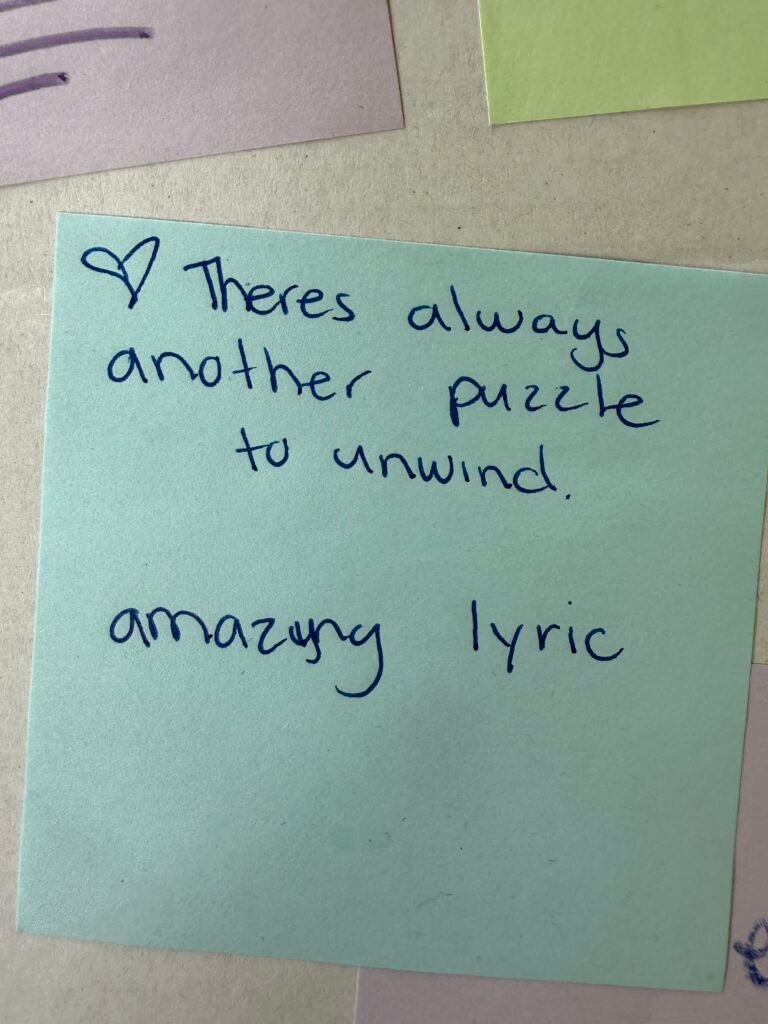
Some were sharp-eyed typo catches. (THANK YOU!)
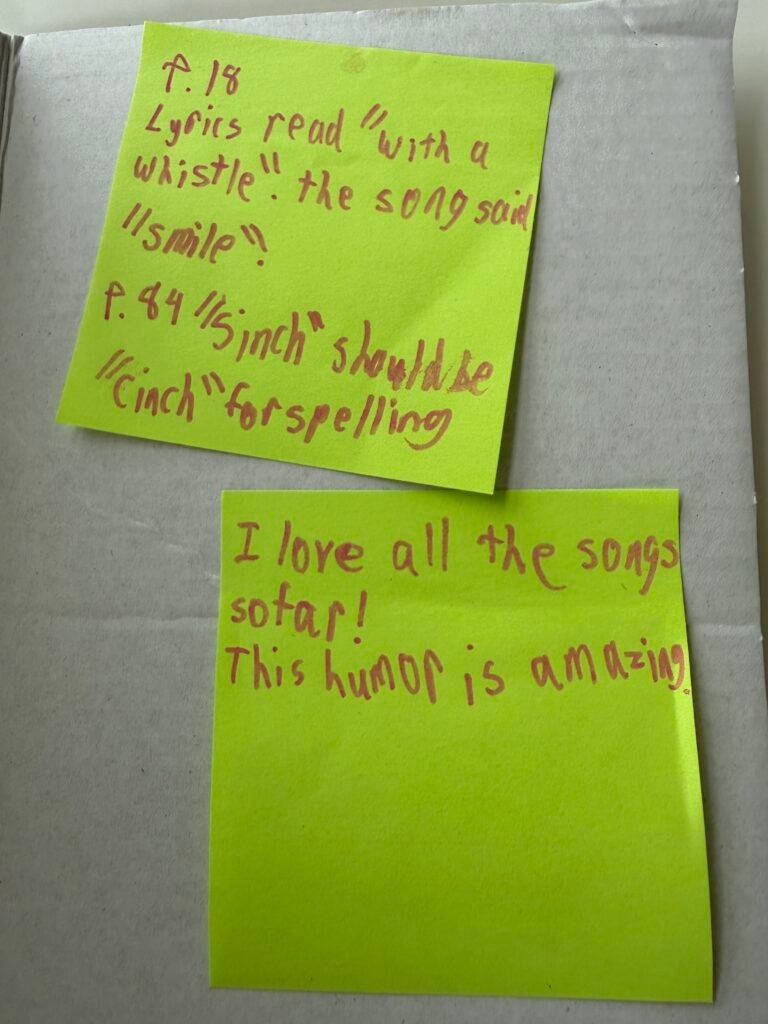
Others were (incredibly fair) questions.
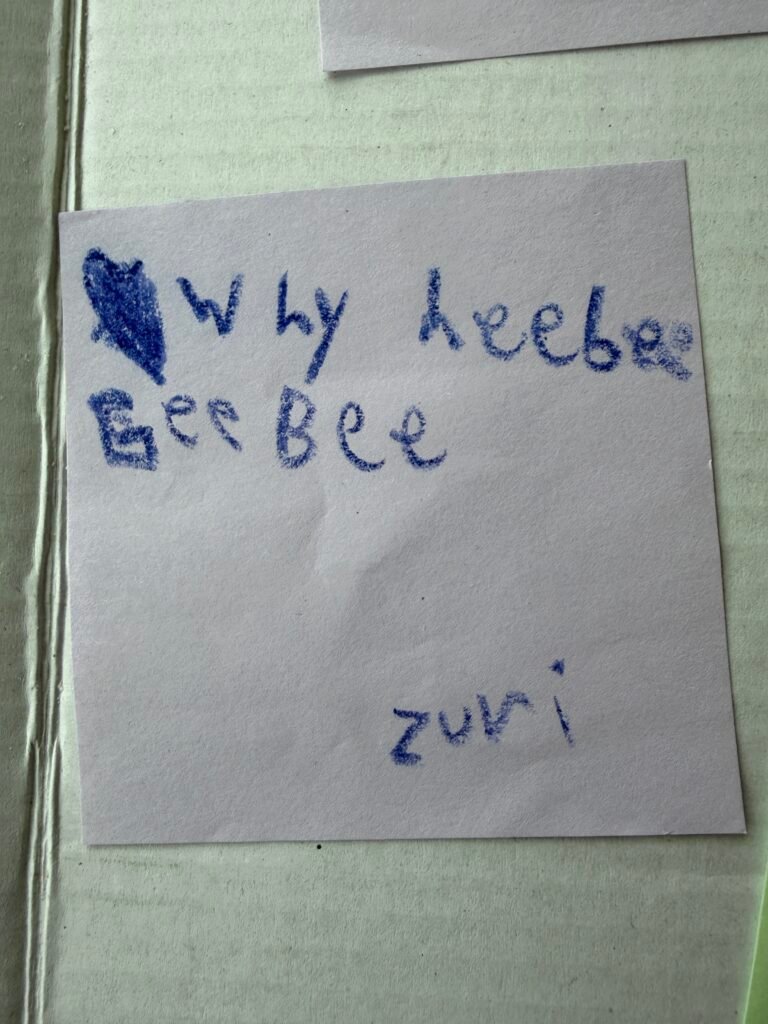
And then there’s this gem:
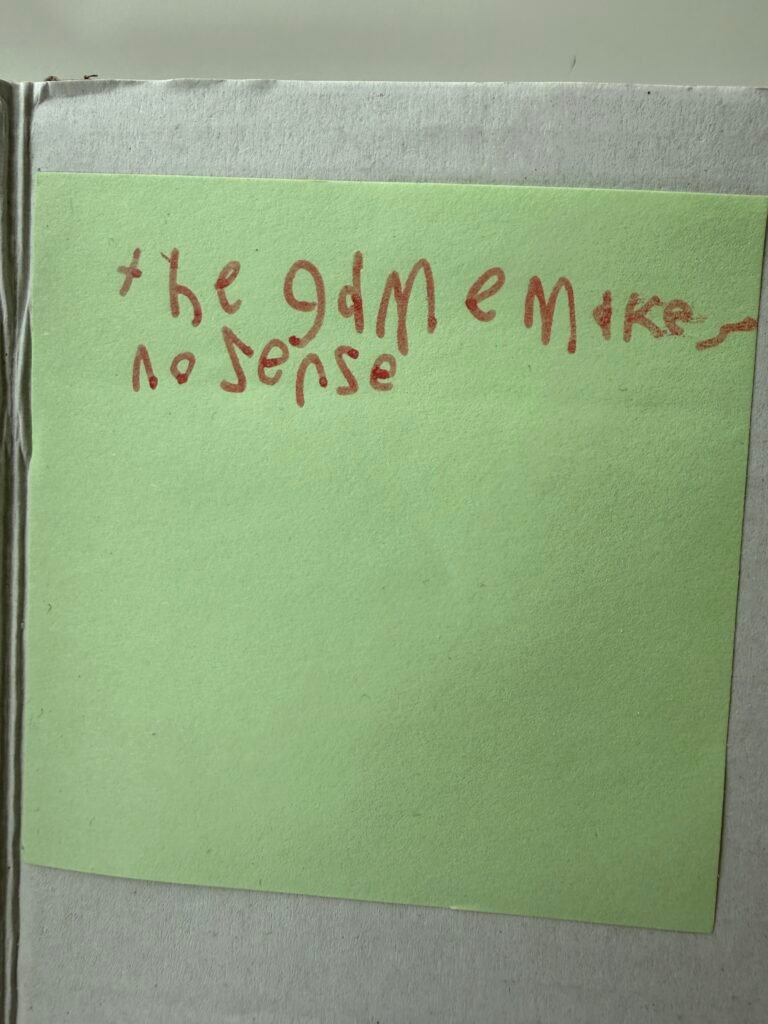
“The game makes no sense.” I do, for what it’s worth, know the identity of this post it’s author — my 7-year-old, who was very keen to get a pink Starburst. It’s a bit of a troll, to be sure, but also they had a LOT of questions about how a video game created in 1983 could possibly have all this singing and interaction. I tried to teach him all about “willing suspension of disbelief,” but he was still dubious.
More for the development list, I guess.
What I Learned
The most valuable dramaturgical eye in the room that day, was, honestly, my husband’s.
He’s been an unofficial collaborator on Battle Crown longer than anyone. I wrote the first draft shortly after we were married, and he saw the very first production in 2015. He’s notorious for both giving me a ton of ideas to pick and choose from, and also for participating in conversations that lead to me brutally paring down the script, lol.
Fun fact: the current “Some Games” opening number is the direct result of a conversation we had about convergent and divergent gameplay!
His read: Act One pacing is working. The revisions I’d made since a previous table read to the teenagers’ circumstances and framing story are landing the way I’d hoped. Act Two has some specific scenes that need tightening, and those will get targeted in future development steps.
I was reading stage directions and running music during the reading, so I wasn’t watching things with a critical eye as we read. But I did get to experience the energy and humor with the cast, and it was so satisfying to see all my previous edits and cuts helping to streamline and tighten the story.
Takeaways
1) Community theater can be an AMAZING development resource….
2) …but you will probably have to do the prep and legwork yourself.
Community theater friends and family are showing up as enthusiastic humans, not professional actors and dramaturgs. They’re probably not going to know what kind of support the process needs until you tell them, and you will need to explain many things you might otherwise take for granted. But the enthusiasm, love, interest, and talent you will find there is unmatched. These are people who are used to doing theatre for the love of it, and they will love helping you move your show forward.
And most importantly…
3) Battle Crown belongs in a theater like Bedford. Multigenerational. Community-rooted. Open and welcoming. That’s world the show was written for. And seeing it fit in so well in that world was validating in a way I hadn’t expected.
What’s Next?
There’s a LOT coming up for Battle Crown. Development, productions, side quests, getting yelled at by Rebecca for not-finishing-the-dang-score-already….
More on that soon. Press Start.
(Table read photos courtesy of @pax10photoandvideo)